


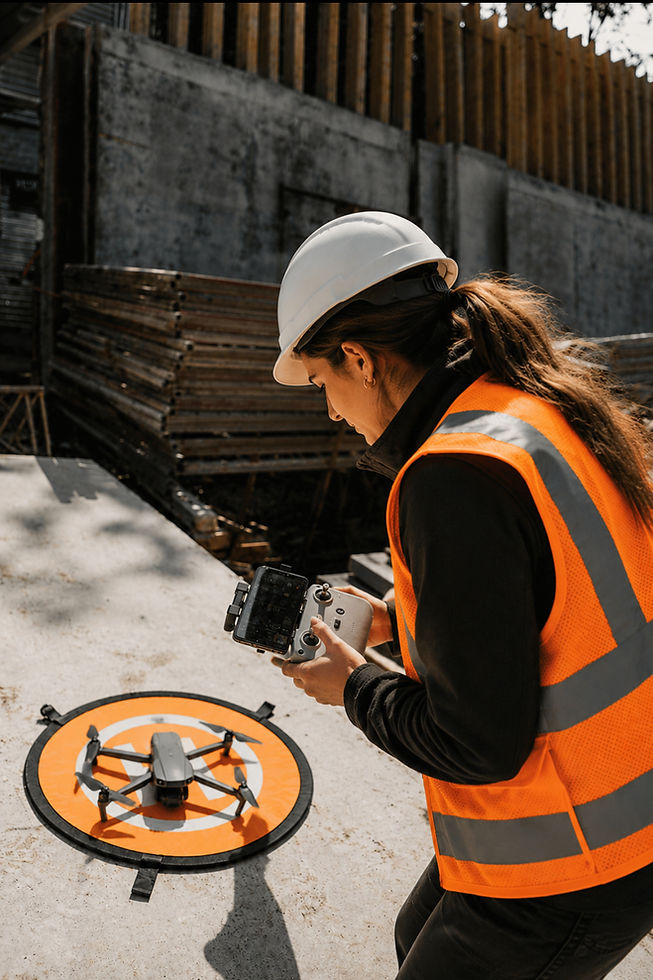
Most people track progress from the ground. That’s the wrong angle.
Aerial progress documentation is one of those things that sounds like a nice-to-have until you actually use it. Then it becomes the thing you wonder how you managed without.
Construction sites are busy, hazardous, and constantly changing. Getting a clear, consistent picture of what’s happening and how far things have come is harder than it sounds from ground level.
Here’s why more project owners, developers, and site managers are turning to drone documentation to track their builds.
01. Scale lies from the ground.
You can walk a construction site every day and still not fully grasp what’s being built. Pull up to altitude and suddenly the whole thing makes sense. The footprint, the structure, the sheer size of what’s going up. Ground level photos can’t show you this. An aerial shot can.
02. Nobody should be climbing scaffolding for a progress photo.
Active construction sites are hazardous environments. Adding extra bodies increases risk. A drone gets every angle from ground level to full roofline height without anyone setting foot on an unfinished structure.
03. One flight. Full coverage.
What would take a ground crew hours to capture, a drone covers in a single session. Faster turnaround, less disruption to the site, and you come away with more usable material than a full day of ground photography.
04. Consistency is everything.
Same altitude, same flight path, every visit. The footage stacks. Month one next to month four tells a story that stakeholders and clients can actually read. It’s not just documentation, it’s a visual timeline of your project.
05. Your future self will thank you.
A dated aerial archive of your build is quietly one of the most useful assets you’ll have. Stakeholder reporting, insurance, dispute resolution, or simply showing where you started and where you ended up. Most people realise this too late.
Aerial progress documentation isn’t a luxury add-on. It’s a smarter way to record one of the most significant investments you’ll make and it costs a fraction of what most people expect.
If you’re mid-build and haven’t started yet, it’s not too late. If you’re planning a new development, build it into the brief from day one.

Ready to start tracking your project from above? Get in touch.


Comments